.png)



Carolina Flooring Specialists installs epoxy floor coatings for homes and businesses across Simpsonville, SC: basements, workshops, mechanical rooms, retail floors and finished interiors, ground back to sound concrete and sealed under a polyaspartic topcoat.
.jpg)
%20copy.jpg)


The difference between an epoxy floor and a painted one is what happens underneath. Paint sits on the surface. An epoxy system is bonded into concrete that has been ground open first, then built up in layers and sealed. We have been installing them across the Upstate since 1999.
We work in 100% solids resin-based epoxy. Solids are the part of the mix that stays behind once the floor has cured, so a 100% solids system holds the thickness it was specified at instead of thinning as solvents evaporate. Thickness is what you are buying, because thickness is what takes the wear.
What goes down depends on the room. We look at the condition of the slab, what the floor has to survive, and how you want it to look, then specify around those three things.
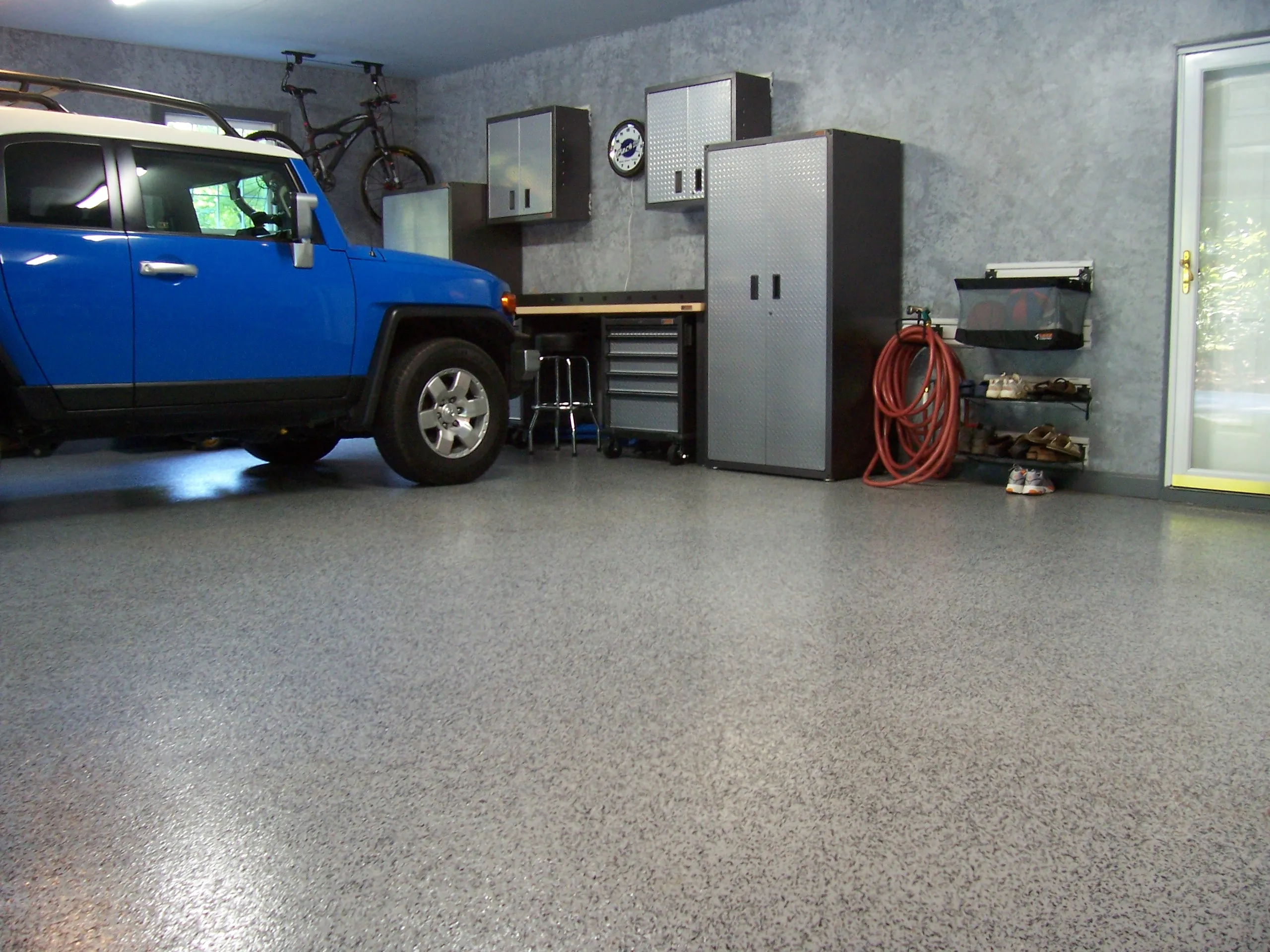
Almost any interior concrete slab can take one. In Simpsonville the common ones are basements, mechanical and utility rooms, workshops and outbuildings, sunrooms and finished living space, retail units and showrooms, and light production areas.
The demands are not the same in each. A utility room needs to shrug off whatever leaks onto it. A workshop has to survive dropped tools and rolling weight. The system gets chosen for the job rather than the job being fitted to one system.
Garages are their own case, common enough and specific enough to have a page of their own: vehicle weight, hot tires and automotive fluids all change what the floor has to do.
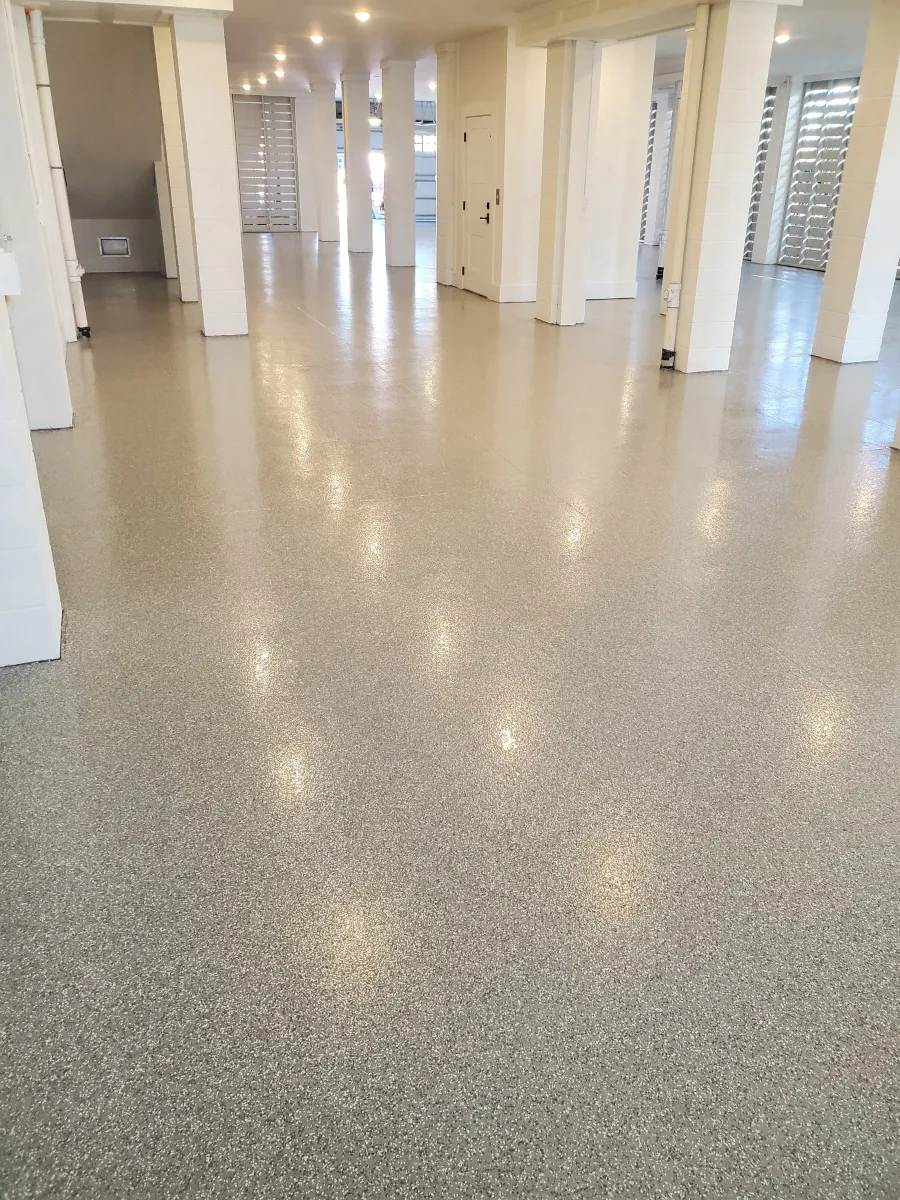
Garage flooring in SimpsonvilleDecorative flake is the usual choice in homes. Acrylic flake is broadcast into the wet base at 50 pounds per 500 square feet, then locked under a UV-resistant polyaspartic clear coat. It disguises minor defects in the slab and leaves texture underfoot instead of a slick sheet.
Solid color is the simplest finish: one flat, even color, hard-wearing, and usually what storage and back-of-house areas get. Metallic epoxy is the decorative end, with pigment worked through the resin so the finish has movement in it, which suits showrooms and rooms meant to be looked at.
Where a floor has to take chemicals or stay grippy when wet, we build from a moisture-tolerant penetrating primer and can broadcast a quartz aggregate. Those systems are USDA compliant, which matters in food handling and healthcare.
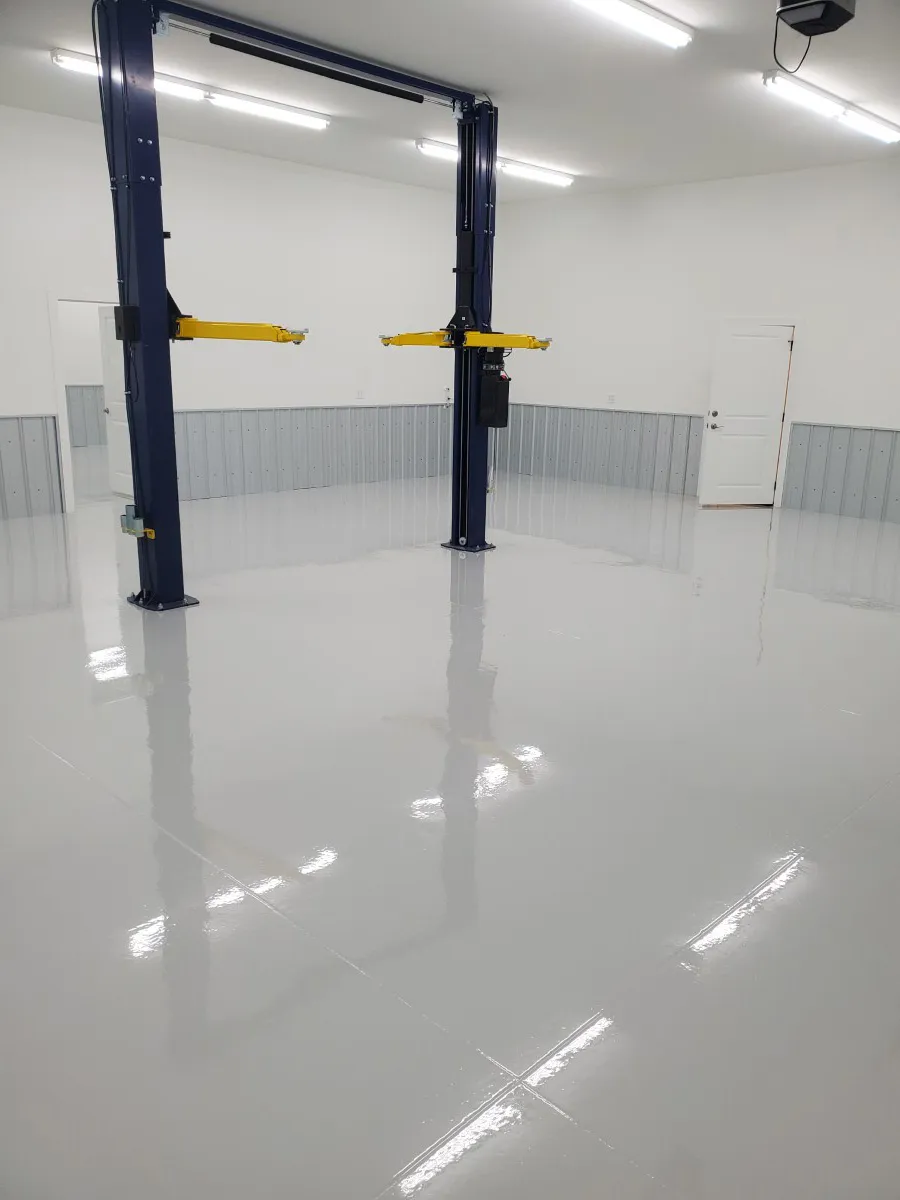
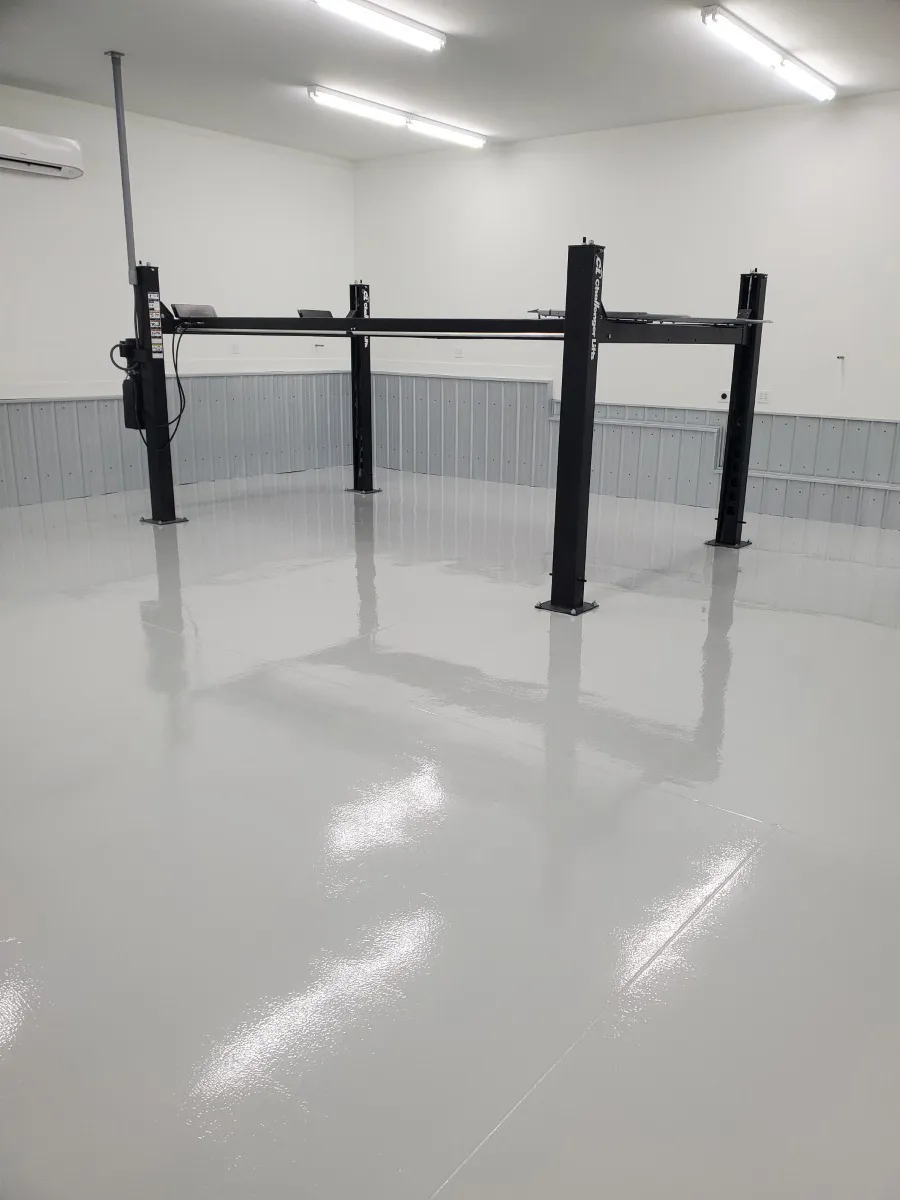
There are no joints and no open pores in a cured epoxy floor, so there is nowhere for dirt to lodge. Spills stay on the surface until someone wipes them up, and marks that would soak into bare concrete and stay there come off instead.
Wear lands on the clear coat rather than the color underneath, which is deliberate: the clear coat is the layer that can be taken back and redone years later without lifting the whole floor. Flake and quartz surfaces keep their grip when wet.
The one thing worth knowing is that grit is the enemy. Sweep it off and the finish lasts. Leave it under a boot or a wheel and it works like sandpaper.
Most failed epoxy floors failed at the preparation stage. Concrete has a closed surface, and a coating laid straight over it has nothing to hold on to. We open it up mechanically with diamond tooling so the epoxy can key into the slab. The grinders run under vacuum extraction, which keeps dust down when we are working inside an occupied house.
Cracks and divots are repaired first. If the slab is holding moisture, and below-grade rooms often are, we start from a moisture-tolerant penetrating primer. After that it is a sequence: primer, base coat, flake where the system uses it, then the polyaspartic clear coat sealing everything below it.
.webp)
.webp)
Carolina Flooring Specialists has been privately owned since 1999 and is still run locally. In that time we have completed over 21,000 projects and laid more than 4 million square feet of floor coating across South Carolina and western North Carolina, with over 40 years of combined experience in 100% solids epoxy and polyaspartic systems.
The floor comes with a written lifetime warranty against peeling or debonding. That is a statement about preparation as much as materials, because bond failure is a preparation problem.
The showroom at 141 Highland Way in Taylors has the finishes out where you can handle them, which is worth doing before choosing off a screen.
See the color chartSimpsonville sits in Greenville County, about fourteen miles down I-385 from Greenville, and it has grown quickly. The population went from 18,238 in 2010 to 23,354 in 2020, up more than a quarter in ten years, and most of that arrived as new housing. A lot of the concrete here is young and in good condition.
That changes the conversation. On a sound modern slab the work is mostly grinding, priming and finish choice rather than repair. Older property towards the Woodside Mill end of town is the exception and more often wants crack and divot work first. Either way we look at the concrete before quoting, because its condition drives what the job actually involves.
Tell us what the space is and how it gets used. We will look at the concrete, work out which epoxy system fits, take you through colors and finishes, and price it.
Do you have a question, comment, or concern that wasn't addressed on the site? We want to hear from you!

High-performance, industrial-grade epoxy flooring for commercial properties that want to stand out with a safe walk on surface.

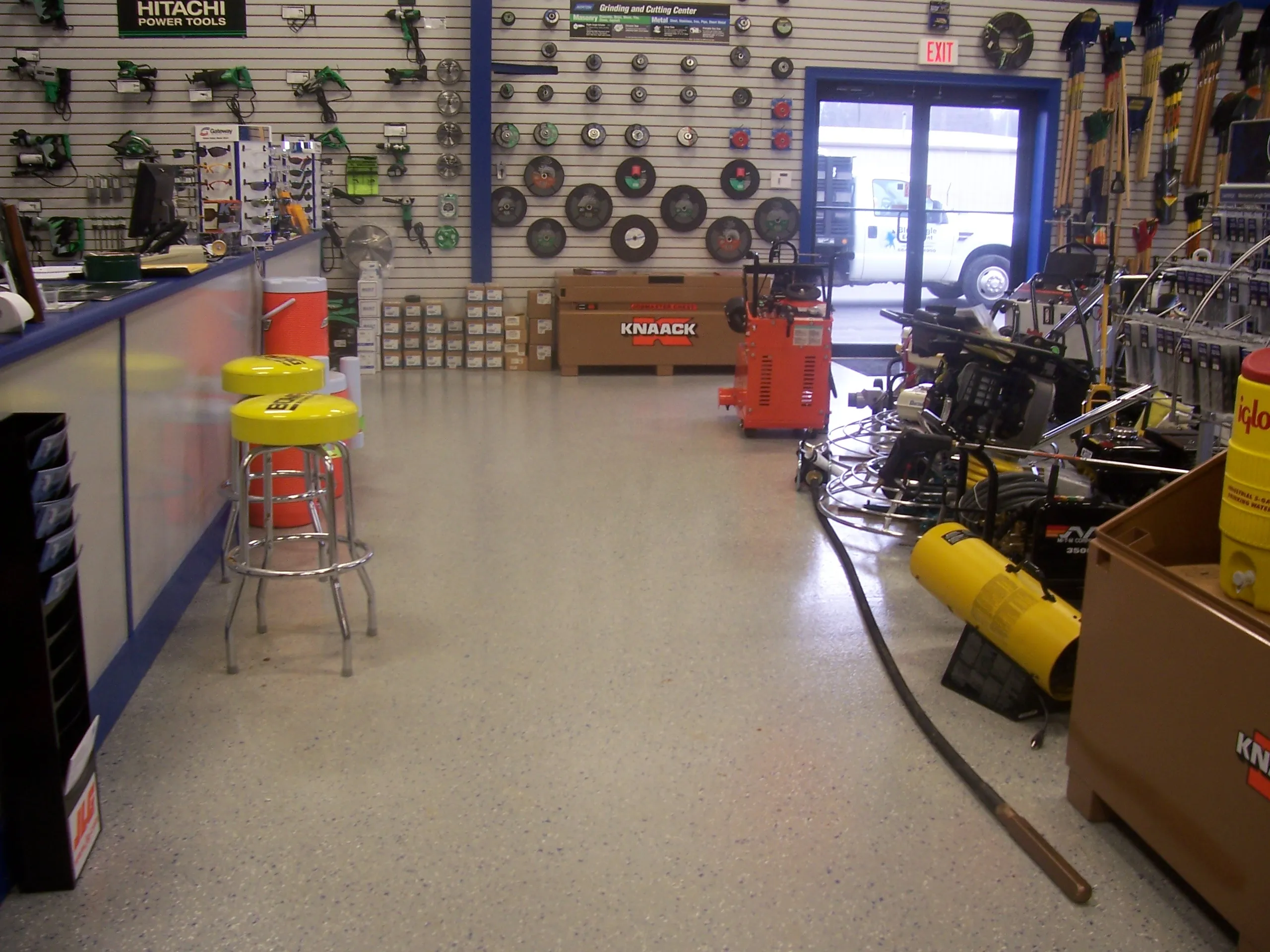
Industrial grade, chemical resistant epoxy floor coatings for the toughest industrial environments in South Carolina.
.webp)
.svg)