.png)



Carolina Flooring Specialists installs epoxy floor coatings for homes and businesses in Seneca, SC: basements and lower levels, workshops, mechanical rooms, retail floors and finished interiors, ground back to sound concrete and sealed under a UV-resistant polyaspartic clear coat.
.jpg)
%20copy.jpg)
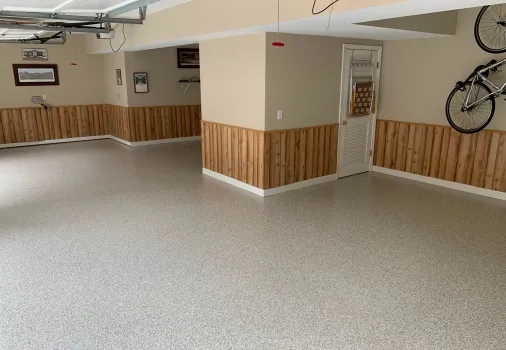

An epoxy floor is not paint and it is not a sealer. It is a resin system bonded into concrete that has been mechanically ground open first, then built up in layers and finished with a clear topcoat. We have been installing epoxy floors across the Upstate since 1999.
We use 100% solids resin-based epoxy. The solids content is what stays on the slab once the floor cures, so a 100% solids epoxy holds the film thickness it was specified at rather than shrinking back as solvents flash off. That thickness is what carries the wear.
Every epoxy floor is specified for the room it goes in: the condition of the slab, the traffic it takes, and the finish you want.
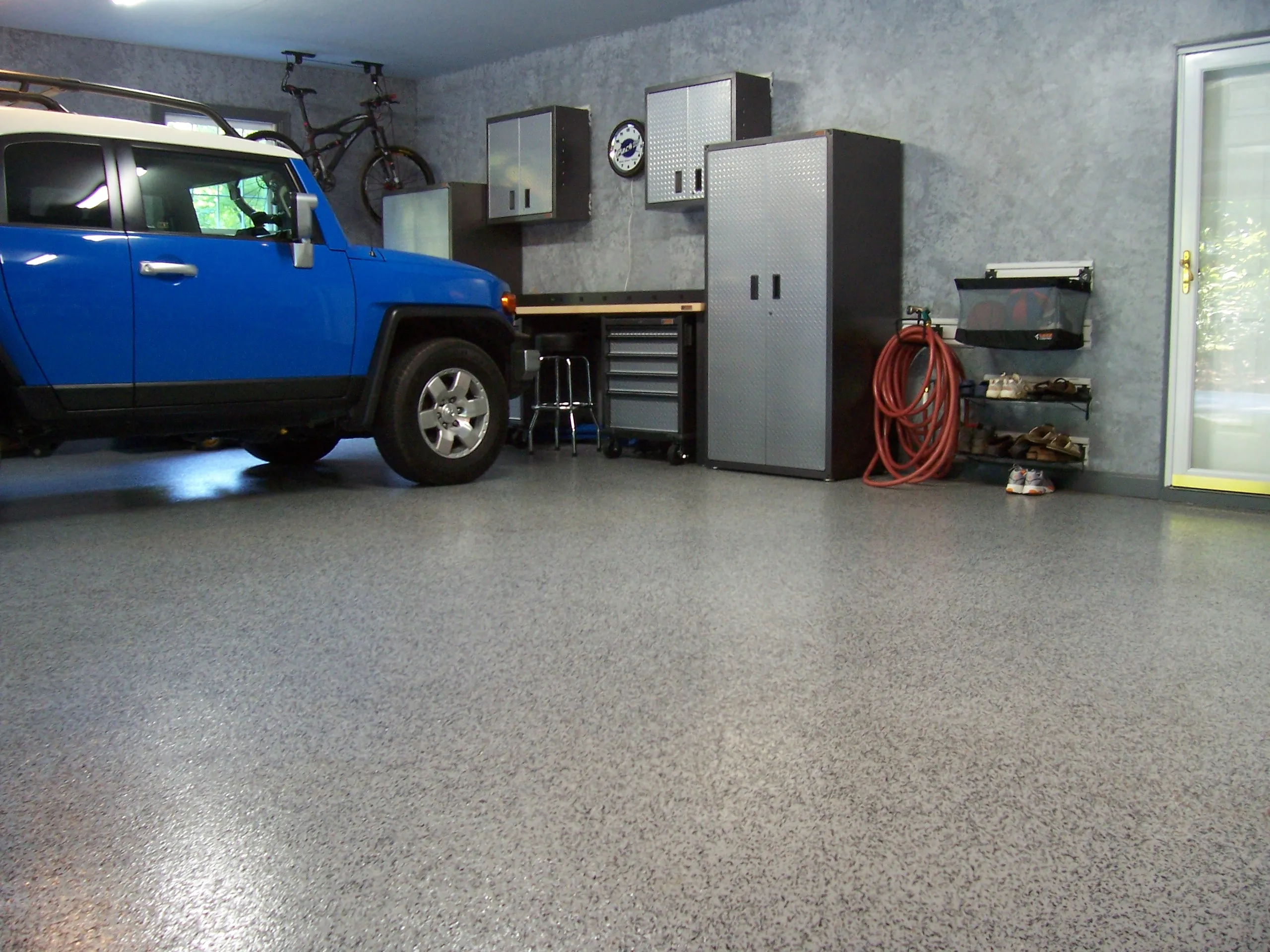
Epoxy suits almost any interior concrete slab. In Seneca we most often coat basements and lower levels, workshops and outbuildings, boat and equipment storage, sunrooms and finished interiors, and retail floors.
Each is a different problem. A walk-out basement that sits below grade is not the same job as a workshop with rolling loads under it. We specify the epoxy system around the slab, the traffic and the finish.
Garages are a common application with their own requirements around vehicle weight, hot tires and automotive fluids, so they have a page of their own.
Garage flooring in SenecaDecorative flake is our most popular epoxy system and the usual choice in homes. Acrylic flake is broadcast at 50 pounds per 500 square feet and sealed under a UV-resistant polyaspartic clear coat. It hides imperfections in the slab and leaves a naturally slip-resistant texture.
Solid color epoxy is a single even color, hard-wearing, and a common choice for mechanical rooms, storage and back-of-house commercial space. Metallic epoxy moves pigment through the resin for a finish with depth, which suits showrooms and interiors where the floor is on display.
For heavier duty we build from a moisture-tolerant penetrating primer and 100% solids epoxy, and can broadcast a quartz aggregate for extra grip. Those systems are USDA compliant.
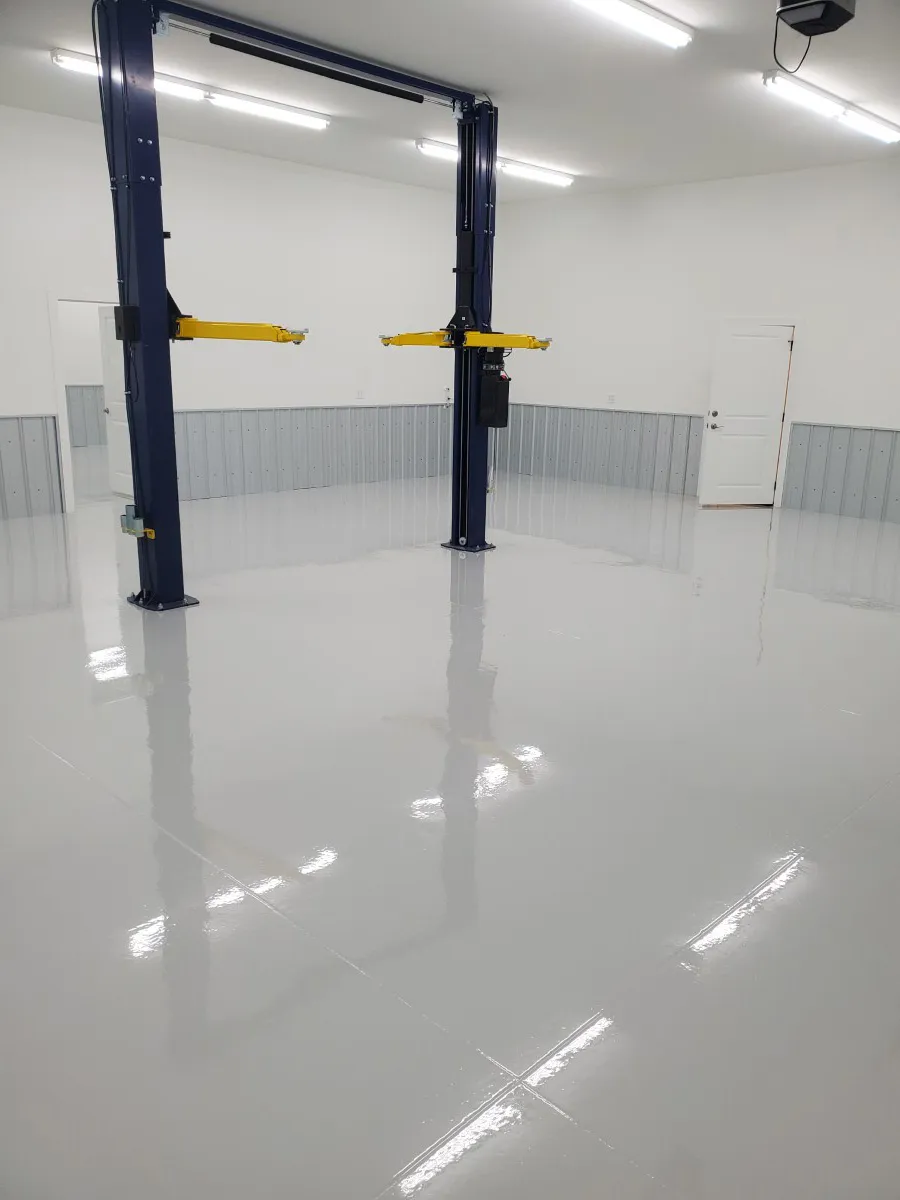
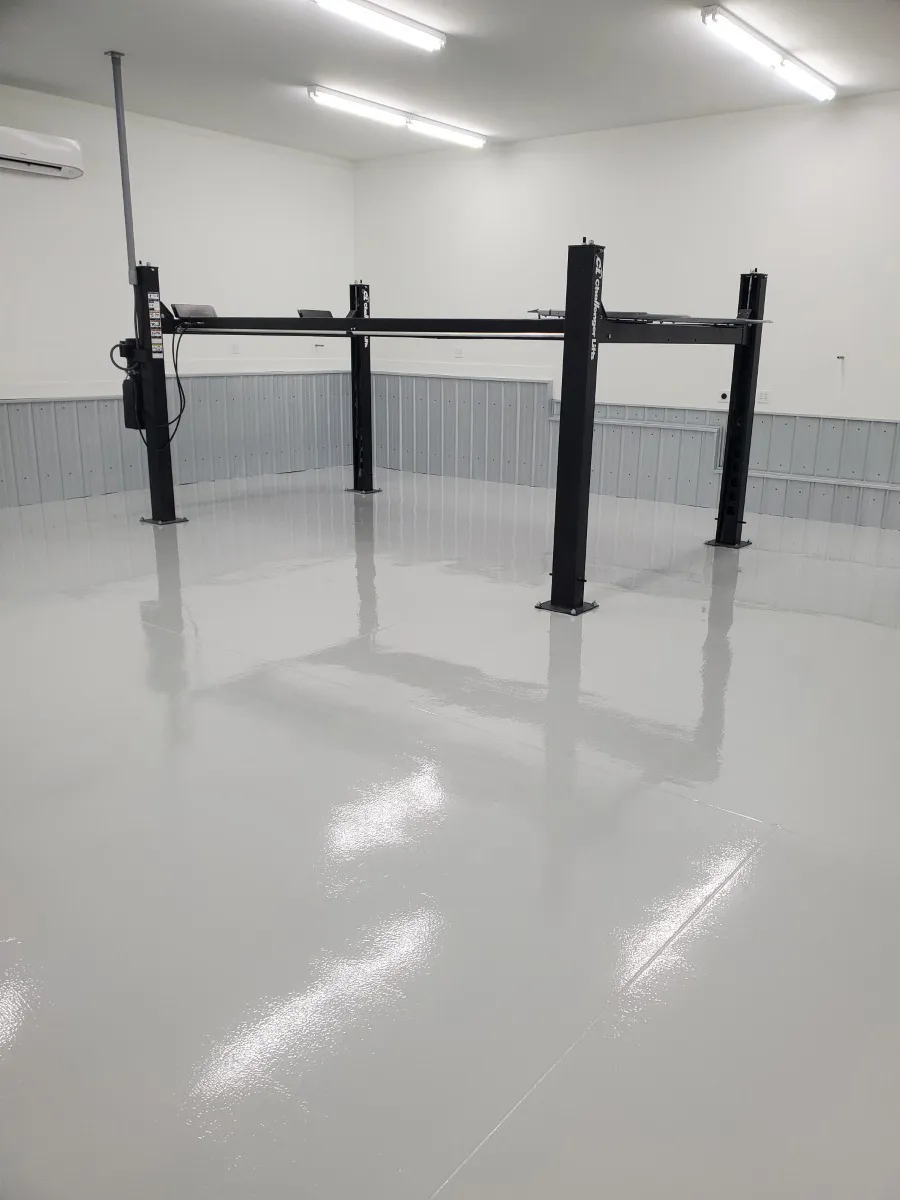
A cured epoxy floor is seamless. There are no grout lines, no joints and no open pores, so spills sit on the surface instead of soaking in, and cleaning is a mop rather than a scrub.
Wear goes into the clear coat rather than the color coat beneath it, and the clear coat is the layer that can be refreshed years later without redoing the epoxy floor underneath. Flake and quartz finishes keep their grip when wet.
Maintenance is low but not nothing. Keep grit swept off, because grit under a boot or a tire is what abrades any epoxy floor.
Preparation is where an epoxy floor is won or lost. We do a full mechanical prep by diamond grinding, which opens the concrete so the epoxy keys into the slab instead of sitting on the surface film left by an acid etch or a hardware-store kit. The grinders run under vacuum extraction, which keeps dust down inside a finished house.
Cracks and divots are repaired before anything is coated, and where moisture is a risk we start from a moisture-tolerant penetrating primer. The epoxy system then goes down in sequence: primer, base coat, flake broadcast where the system calls for it, then the polyaspartic clear coat.
.webp)
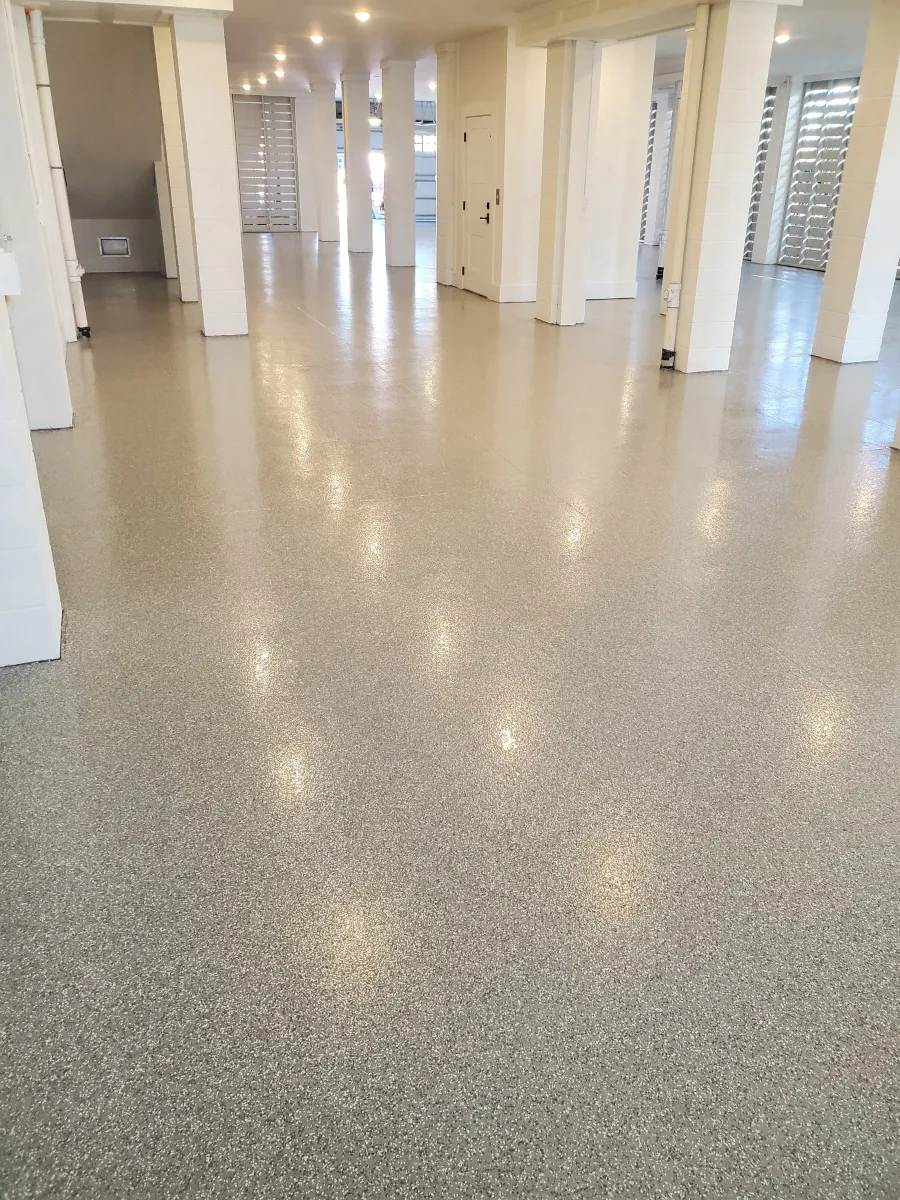
Seneca is the largest town in Oconee County, in the north-western corner of the state, and it was a railroad and mill town before it was a lake town. The cotton mill villages at Newry and Lonsdale carried the local economy through the first half of the twentieth century, and their houses are still in use. Those slabs are old, and they usually want crack and divot repair before an epoxy floor goes down.
The lakes changed the rest of it. Hartwell filled in 1963, Keowee in 1971 and Jocassee in 1974, and lakefront and second-home building followed. A lot of that stock has walk-out lower levels, so more of the work here sits below grade than in a town away from the water. Where a slab is below grade or reads damp, we start from a moisture-tolerant penetrating primer rather than coating straight onto it.
We are privately owned, started in 1999, and still locally owned and operated. Since then we have completed over 21,000 projects and installed more than 4 million square feet of floor coatings across South Carolina and western North Carolina, with more than 40 years of combined experience in 100% solids epoxy and polyaspartic systems.
Every epoxy floor carries a written lifetime warranty against peeling or debonding. That warranty follows from the preparation, because bond failure is a preparation problem.
Our showroom at 141 Highland Way in Taylors is open if you would rather see and handle the finishes than choose from photographs.
See the color chart.webp)
Tell us about the space and how it is used. We will assess the concrete, recommend an epoxy system, take you through colors and finishes, and give you an estimate.
Do you have a question, comment, or concern that wasn't addressed on the site? We want to hear from you!

High-performance, industrial-grade epoxy flooring for commercial properties that want to stand out with a safe walk on surface.

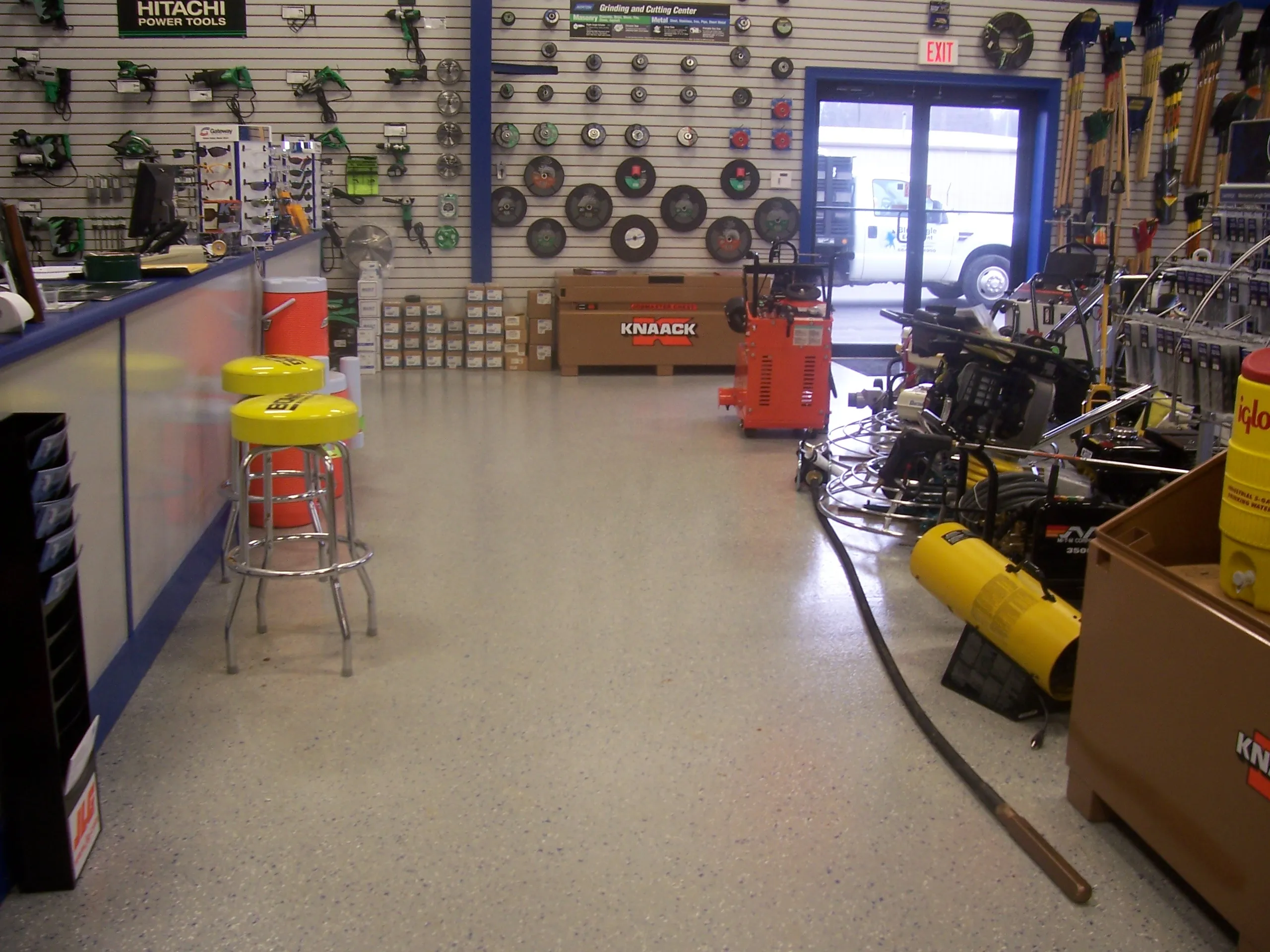
Industrial grade, chemical resistant epoxy floor coatings for the toughest industrial environments in South Carolina.
.webp)
.svg)